
Machesney Park Address History Sources
The backward trail changes by era. Current parcel records can seed the search, while older ownership may require Recorder stations, vendor indexes, or IRAD retrieval. Household evidence comes from regional library material rather than a complete village-only directory run. Start with the newest reliable parcel identity and work toward older evidence.
| Source | Years located | Where held | What it can show |
|---|---|---|---|
| IRAD deed records | 1836-1891 | IRAD at NIU | Early grantor, grantee, and legal-description trail |
| IRAD mortgages | 1845-1918 | IRAD | Borrower and lender clues, not occupancy |
| Recorder records | Office history from 1830s; online cutoff unstated | County Recorder | Transfers, liens, document dates, and images |
| Assessor history | 2003-2025 observed | County Assessor | Parcel, owner or taxpayer, location, assessments |
| Probate and court series | 1854-1958 across series | IRAD | Estate, heir, guardian, sale, or case context |
| NSLD local history | Series-specific | Loves Park and Roscoe branches | Directories, atlases, newspapers, oral histories |
| Federal census | 1790-1950 released | Library databases and NARA | Dated households where schedules and address tools allow |
For events after the Village incorporated in 1981, permits and local notices may add context. Before incorporation, search North Park and Harlem Township labels as well as Machesney Park. No official historical-owner list by street address was found, so the chain must be built from its parts.
Seed Machesney Park Previous Residents Searches
Begin a previous residents search at the Winnebago County Assessor with Number, Direction, Street, and Suffix. Save the PIN, current location, owner or taxpayer label, year selector, and WinGIS link. The observed result range from 2025 through 2003 can show when assessment fields changed, but a change is only a lead. Confirm the legal transfer in the deed index.
WinGIS helps reconcile the mapped parcel with the legal description. A split, consolidation, new subdivision, right-of-way, or alternate PIN can break a simple address search. Use the full legal description instead of guessing what the hyphenated PIN segments mean. County sources do not publish a segment-by-segment decoder.
Trace Winnebago Deeds Backward
A chain of title is the sequence of recorded transfers affecting the same land. Start with the current parcel and work from each buyer's purchase to the seller's earlier purchase. Record the instrument number, execution and recording dates, document type, parties, book and page, legal description, consideration if shown, and return address. Trusts, estates, quitclaims, and parcel changes need extra care.
- Pull the current PIN, owner label, and legal description from the Assessor and map.
- Find that party's acquisition deed by parcel, legal description, or grantee name.
- Read the instrument and identify the grantor, then search that grantor's earlier acquisition as grantee.
- Repeat while the legal description remains consistent. Resolve every split, consolidation, trust, or estate.
- When the web index stops, use the Recorder counter, mail or email search, or IRAD finding aids.
- Grantor and grantee
- The grantor gives an interest; the grantee receives it. Either may be an entity rather than a person.
- Chain of title
- The linked series of recorded transfers for the same land.
- Legal description
- The formal land description in the deed. It is more stable than a mailing address.
The Tapestry grantor-grantee search pictured below supports party, date, consideration, legal-description, document-type, and book/page filters.
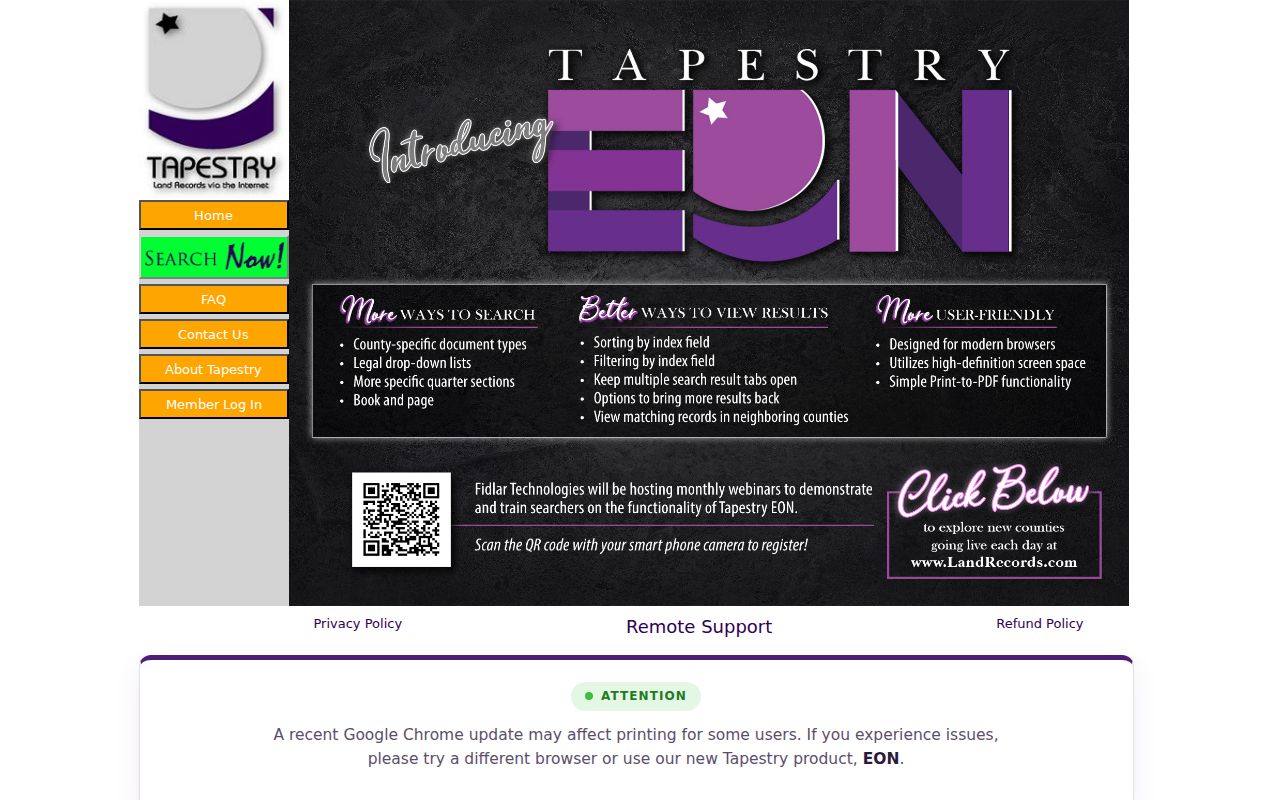
Tapestry costs $8.75 per search and $1 per printed page, with images included. DirectSearch is free but limited and has no images. Laredo serves subscribers. The index identifies documents; it does not prove that a recorded owner occupied the site.
Machesney Park Deed Search Fallbacks
The Winnebago County Recorder provides public stations at 404 Elm Street, Room 405, Rockford, during weekday office hours. Staff cannot search by phone. Mail and email document requests cost $10 per search for material under 20 years and $29 when older, with no more than five searches per request. Plats cost $10 per search plus $4 per page.
For a large chain, the public station is the practical route. Bring the PIN, legal description, names, and date range. An email response may take up to two business days and can include a payment link. Ask whether a missing book is digitized, indexed, staff-retrievable, or available only on microfilm. “Scanned” does not always mean publicly searchable.
IRAD Extends Machesney Park History
The IRAD Winnebago guide reaches beyond modern vendor screens. Deeds run from 1836 to 1891, mortgages from 1845 to 1918, powers of attorney from 1881 to 1909, probate wills from 1866 to 1919, and county court files from 1854 to 1958. Widow-relinquishment and probate real-estate-sale series may explain transfers tied to death or family property.
The depository is at Northern Illinois University in DeKalb. Retrieval depends on the series and finding aid; coverage dates do not guarantee that every name or parcel survives. A partial courthouse fire before March 1873 adds a preservation warning. Ask whether the needed volume survived elsewhere rather than assuming all early records were lost.
Note: Illinois required grantor and grantee indexes from 1847, but that rule does not guarantee complete preservation or online access for Winnebago County.
Ask NSLD About Past Residents
The North Suburban Library local-history request is the best human fallback for a house question. Its required fields are Date, Name, Email, and Question/Comments; phone and mailing address are optional. The form says to allow seven days. Give the exact address, approximate era, former street or place-name variants, and the kind of source desired.
Ask staff to check Machesney Park, North Park, Harlem Township, Loves Park, and historic road labels. The confirmed holdings include city directories, plat maps, atlases, the digitized Post Journal from 1947 to the present, Herald runs, photographs, yearbooks, and oral histories. Exact city-directory and criss-cross years are not published, so staff confirmation matters.
Machesney Park Names Shift Over Time
Machesney Park incorporated after a February 24, 1981 referendum, with first officers elected in spring 1982. Earlier sources may call the area North Park or tie it to Harlem Township and the former Machesney “Rockford” Airport. A search that uses only the current village name can miss a deed notice, directory entry, photograph, or newspaper item.
Keep a place-name log beside the address log. Search each known label, but do not claim an old road was renamed without a plat, Village record, or other official source. No verified local renumbering schedule was found. A 1939 Historic Aerials layer in WinGIS can reveal an old road or lot pattern, then plats and deeds must confirm what the image suggests.
Guard Today's Machesney Park Deed
House-history research can expose an unfamiliar filing. Winnebago's free Property Fraud Alert offers mail, email, or text notices when a matching document is recorded. The Recorder tied a review process to 2026 legislation and anticipated reviewing qualifying alerts on or after September 8, 2026. Check the current county notice because that implementation date may move.
An alert is a prompt to verify, not a finding of fraud. Compare the instrument number and legal description, then contact the Recorder. The office warns about “Local Records Office” style solicitations charging $94 for copies and notes that a mortgage payoff produces a release of mortgage, not a deed.
Machesney Park Households Across Sources
Owners are only part of the past-resident trail. A dated city directory may name a householder, spouse, occupation, or street address. A reverse directory, when the library confirms one, may list entries by address. The 1950 federal census is the latest public population schedule as of the research date under the 72-year rule. It can be searched by name or address with enumeration-district maps.
- Start with an address and year already supported by an assessor, deed, plat, or newspaper record.
- Ask NSLD for the nearest directory volume and record the exact title, year, page, spelling, and abbreviations.
- Use census schedules for released census years, matching address, household names, ages, and relationships.
- Search the Post Journal, Herald, yearbooks, oral histories, and probate series for dated confirmation.
The 1890 federal census was destroyed in a separate 1921 fire, which makes substitute sources crucial. Directories and newspapers can bridge that gap, but they are dated clues. Full details about the regional shelf belong on the Machesney Park city directories page. An obituary may connect relatives or a former address, while probate can explain an estate transfer. Neither should be stretched beyond what the record states.
Lawful use. Research previous residents for house history, family history, estate work, and personal curiosity. Never use a dated address clue to track, harass, or harm a living person.